Showing posts with label cancer. Show all posts

Monday, February 8, 2021

Mayonnaise


I FaceTimed recently with a friend who has suffered from low vision all her life. It wasn't until she was a middle-aged adult that a doctor finally declared her legally blind, though she probably could have qualified much earlier. Up until very recently, with the use of adaptive technology, she could see super-enlarged type on the computer, make her own meals, and even do a bit of quilting. Though she hasn't been able to drive in years, she's been able to live relatively independently with some help from part-time caregivers and delivery services. That changed a few weeks ago when an ocular migraine further clouded her already shaky vision. 

She told me it feels like someone suddenly put mayonnaise over what was left of her sight. Now the light gets in through a white translucence, and there are shapes, shadows, things in motion, but when it comes right down to it she can't see. She just can't see. And she lives alone. It's terrifying.

My friend is seeking treatment, but appointment wait-times are long, and she has to arrange for transportation, which is not so easy in the rural/suburban community where she lives. She can't just call Uber or even a taxi service, and she hasn't the means, nor the desire to move to a place where such things are ubiquitous. Even if she could summon a car, her limited, fixed income would make using such services prohibitive, and the free services available to people with disability tend to be erratic in their scheduling.

Oh, and there's a pandemic, which makes all of that more complicated and worse. Of course.

So we talk about mayonnaise and make offensive blind jokes and cancer jokes to keep our spirits up. We also reminisce about that time decades ago, in school, when we thought we could do or be anything we wanted, which for us meant having lifelong careers in academe, enormous private libraries in our houses, and scholarly projects that required sabbaticals in the south of France. Instead, we're adorably chunky, late-middle-aged, learned women living creatively on slender means and making awful jokes about awful situations over a video-link like dystopic Jetsons.

I say to her "My brain feels like it's been mayonnaised." Every thought is slippery and cloudy. Cancer people call it chemo-brain, or brain fog, but I like my friend's simile better—mayonnaise being in places it shouldn't ever go. I have never liked mayonnaise, never willingly put it on sandwiches, won't eat salads made with it, etc. I even skipped the mayonnaise in France, where I've visited twice, and where, I'm told, it's particularly good.

So that's my advice. Skip the mayonnaise. Definitely don't put it in your eyes or your brains if you can help it. And don't get cancer or blindness. Or coronavirus. Stay as well as you are able, lovelies. I like being here with you, even in a pandemic.

Sunday, April 12, 2020

Beauty Anyway

It poured rain today, Easter Sunday, drenching everything here in Nashville into a soggy mess. In some places there were severe weather watches. Some of my friends up north still have snow. As far as I know, the Easter Sunday churches weren’t packed, because they weren’t supposed
to be open. Christians who celebrate Easter today and those who will be celebrating Orthodox Easter next week, like Jews recently celebrating Passover, are compelled to keep their observances at home.

And whether or not we individually subscribe to a religious observance right now, this time of year feels like a pivot point for lots of us, as we step for real into spring, new beginnings, stirred by pretty days. Still, right now especially, we’re all terribly...uncertain about what comes next.

Because it’s Easter, I can’t help but think about what historians believe life was like for the folks who eventually became Christians in the earliest times, in the last millenium’s first decades and centuries. For the most part, those folks were Jews (and some Gentiles and others) who had, according to the various stories circulating around the Mediterranean in those days, experienced and witnessed some remarkable things while hanging out with this weird carpenter turned radical rabbi/street preacher. Or if they hadn’t seen it with their own eyes, they’d heard the tales. Their own customs and religious practices as Jews had been suppressed and surveilled by the Romans. Their holiest temple had been destroyed, rebuilt, and then destroyed again. Many of their families had lived centuries as refugees far from their ancestral homelands, and some of them living in and around Jerusalem were themselves refugees from other territories. The local and imperial governments couldn’t agree on laws; currency markets were shaky, income inequality crushed the working people, xenophobia thrived, little wars were breaking out all over, and health care sucked. You can see why a street preacher, or even a story about a street preacher with an optimistic message might have gained some traction with that crowd.

That story isn’t one to which most Americans today subscribe, though. It doesn’t bring people comfort in the way it might have even just a few generations ago, and there are lots of good reasons for that, which I won’t get into here. Let’s just say the cruelties inflicted on others in the name of that radical rabbi/street preacher have pretty much discredited most institutions trying to stake a claim on his story.

And yet some people have faith. It might not be a religious faith, but they believe in goodness.
They believe in beauty. They believe in the power of a seed to germinate into something beautiful, something edible, something tall and shady, something wild. And now, now is the time for sowing, friends. Get your beauty planted, people; we’re going to need it in the coming days.

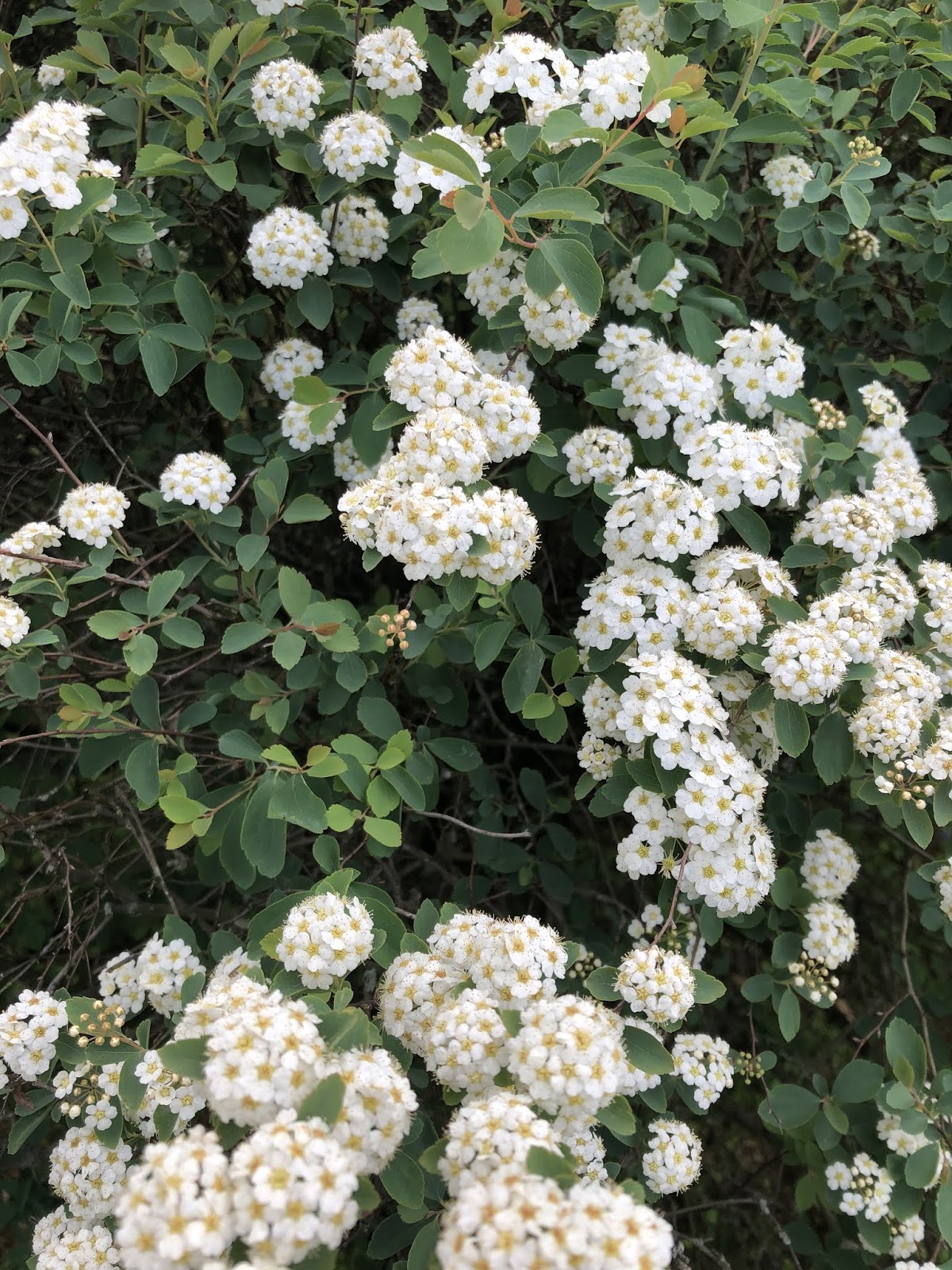
Humans crave beauty. It’s one of the reasons I take so many pictures of flowers. It’s why we paint, or sing, or write poems, or dance. Beauty is its own life force. I think that’s one reason so many cancer patients turn to art when they fall ill, when they are dying. In the ugliness of illness, in the destruction of our bodily temples, we reach for good, and we long for beauty.

It’s my third Easter since diagnosis; my third year of snapping pictures of blooms, of dealing with pollen allergies. It’s my first living with threat of coronavirus. I can’t see far enough into the future to know how that one is going to end, so I’m going to try doing what has worked for me in dealing with cancer. Train my eye on the beautiful and pull it in. That doesn’t mean I’m not acknowledging or caring for the things that are not beautiful; I live with a hideous disease deep inside my body and see awfulness in my community every day. It’s grim stuff and it needs fixing. But that doesn’t mean that we can’t have beauty anyway.


Sunday, January 5, 2020

Cartographies and Cancer

I love maps. I love how each offers the cartographer's idiosyncratic vision of a place. We can map pretty much anything. Houses on a historic walking tour. Stars in the winter sky. The way from The Shire to Mordor and back again. Maps are imaginings of space, stories told or poetry made with lines and dots, numbers, esoteric symbols, and legends. We can't resist tracing them, moving our imagined selves across that imagined space with our fingertips. The map you see here, one of my favorites, traces the meander of the Mississippi River between Cape Girardeau, Missouri and Donaldsonville, Louisiana, showing how its course shifted (and implicitly is still shifting as I write) through the millennia. I'm captivated by the ribbons of pink and deeper pink, by the blues and greens curving and arching in great horseshoes through the Mississippi's capillaire Delta in a sensual visual rhythm. It’s a plotted design that looks abstract from a distance. The map here is a portion of a much larger iconic map that lots of other folks I know love too. In fact, poet and friend Heather Dobbins used it in the cover design for her book River Mouth. On seeing the map hanging in my dining room, another dear friend, Rebel Reavis, suddenly recalled that Donaldsonville was where her parents had met for the first time. Pretty much anyone who comes to my house finds themselves drawn to the map and remarks on it. That bit of cartographical magic has resonance, I tell you!

We take way-finding mostly for granted now, thanks to GPS. But we can imagine what it's like to travel in unfamiliar places without any map at all. How would we get where we wanted to go? All along the route we'd have choices to make, to go left or right, to go uphill or around the bend, to take the road more or less traveled, to move forward or stay put. Or go back. And we’d ask directions of people who know their part of the path, but not necessarily the whole route. Would we be lost? Maybe a little frustrated? Maybe, sometimes, very afraid?

In Advanced Cancerland there is no map. We might say things like "mapping the cancer genome" and declare it will lead to a cure. That's partly true. Though the cancer genome does not comprise the entire strange continent of this illness, it is at least a highly influential principality. But as far as navigating the whole landscape, from diagnosis to cure or, ugh, death, well, we're making that map as we go – testing blood and tumor tissue to find a treatment path, scanning, making new treatment choices when others fail and few or none of the options are all that good, taking direction from physicians and researchers who know their part of the route, but not the whole way there.

Sometimes the journey feels more like a game of Chutes & Ladders. We spin the dial, go a few spaces, get a chance to ascend the rungs, only to find ourselves on the next turn sliding back to where we'd begun.

Things in my part of Cancerland are actually going well at the moment. Just before Christmas I got the happy news that my particular brand of cancer looks like it’s going into remission in response to infusion chemo and radiation. So that was a great Christmas gift! I am grateful to my awesome team at Tennessee Oncology-Sarah Cannon Center – my oncologist Dr. Melissa Johnson, N.P. Lauren Welch, Dr. Casey Chollet-Lipscomb my radiation oncologist, and all the nurses and techs who helped me get through these latest treatments. I am of course profoundly grateful for all my family and friends who loved and took care of me, cooking, cleaning, etc., and to those who sent good vibes and put my name in their prayers. This remission allowed me to untether from the infusion clinic and to have a really good holiday with people I love, which is something I never want to take for granted again.

Of course we have no idea how long the remission will last. For now, I’m back on a full dose of the oral chemo, lorlatinib, in hopes that it will keep the disease in check. And we have a plan in place for if it doesn’t, another clinical trial, the next turn up ahead on the treatment path. But I won’t say lots about that right now, because if all goes well and the remission remains stable, I won’t need a new treatment plan for good long while.

I know how fortunate I am to be here in Remissionhaven for a second time. Many people with cancer never get here, and many who arrive don’t get to stay, as I well know. In the past couple of months, I’ve lost two dear friends, one to ovarian cancer and one to breast cancer, both of whom had experienced remission and subsequent recurrence. Their recent deaths are part of the reason I didn’t crow about my latest remission as I did the first time it happened. Grief and fear.

When you have a rare cancer best treated with cutting-edge medicines and you’ve reached that edge, everything begins to feel a little...improvisational, a little fluid. There is no cure, yet. Treatments are a kind of Hail Mary guesswork.  From where you stand now, you figure you’ll have this disease for the rest of your life, and there is no map for a way forward, only imaginings. Maybe the cartography of a life with metastatic cancer could look something like the Mississippi’s meander, looping over itself, finding a way, shifting over time, lots and lots of time, flowing and flowing.


World Lung Cancer Day is About Transformation

  Hello Friends, Butterflies are symbols of transformation and beauty, as well as symbols of hope. Today is World Lung Cancer Day. It is a d...